
Simple Checkbook Ledger
Teelu AppsFinance
3.41.24K Reviews
- Version
- 3.5
- Installs
- 100.00K
- Age Rating
- Everyone
Screenshots
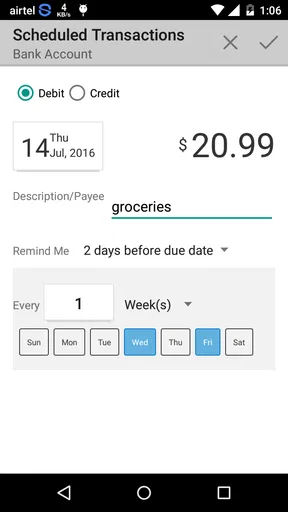
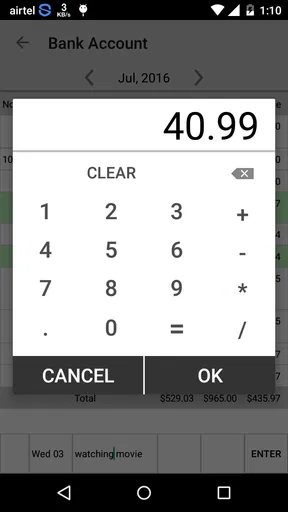
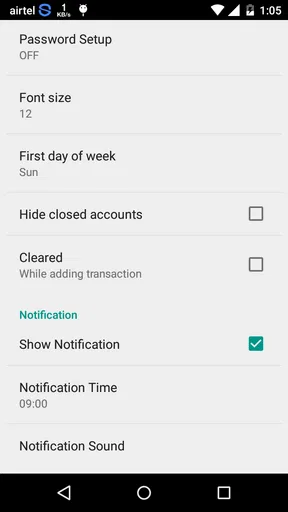
Our Review of Simple Checkbook Ledger
 Analysis by Appyee
I tend to trust a simple ledger more than a complicated budgeting system when the real problem is remembering where money went. Simple Checkbook Ledger is a free finance app from Teelu Apps that takes that old-fashioned checkbook idea and puts it on a phone. After using it, I found its appeal is less about flashy planning tools and more about creating a clear running record of an account.
That makes it especially interesting for a household that shares responsibility for everyday spending. One person can record a payment, another can check the balance before buying groceries, and both can use the same basic ledger habit without learning a full personal-finance platform. The trade-off is equally important: this is a focused checkbook tool, not a complete household finance command center.
How the ledger fits into everyday household money
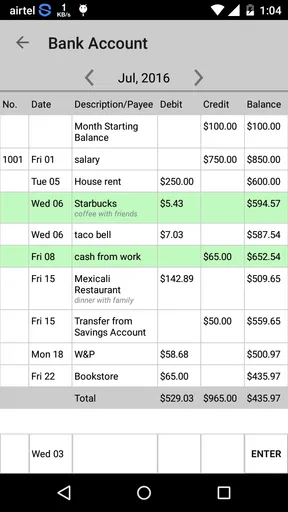
The most useful way to think about this app is as a manual register. I would use it for a checking account, a small cash account, a household spending pool, or any other place where I want a running balance based on entries I record myself. The store’s short description calls it a simple checkbook ledger, and that description is more accurate than any promise of automated financial management.
A realistic example is a shared grocery account. Imagine that one person buys food on the way home while another pays the electricity bill later in the day. If both entries are recorded promptly, the ledger gives the household a common view of what has already been committed. That can prevent the familiar mistake of treating the displayed bank balance as fully available when a payment has not yet cleared.
I also found that the manual nature can be a strength. It makes me pause at the point of spending instead of assuming an outside service will classify everything correctly. For people who want to be deliberate about money, entering a transaction can become a small checkpoint: what was paid, from which account, and what should the balance be afterward?
At the same time, this workflow depends on discipline. If one household member forgets to enter a purchase, the ledger becomes less trustworthy even if every other entry is perfect. I would not treat it as a replacement for checking the actual bank account. I would treat it as a planning and coordination record that works best when everyone agrees to keep it current.
Why a shared device changes the experience
On a personal phone, a ledger is mainly a private habit. On a shared household device, it becomes a coordination tool. That can be useful for a couple, a parent and an older child, or housemates who manage one spending account together. The person holding the device can enter the transaction immediately, while the other person can review the running record later.
There is a practical limitation here: shared use requires clear boundaries. I would not assume that installing the app on one device automatically synchronizes records across several phones, and I would not build a household process around simultaneous access unless the setup has been tested directly. A shared device kept in a common area may be the simplest arrangement, but it also means every user needs to understand who is allowed to edit the ledger.
That boundary matters more than it first appears. A ledger is only helpful when an entry has a clear source. If several people use the same screen without an agreed routine, a correction can look like a new transaction, or a payment can be entered twice. My advice is to decide in advance whether one person maintains the record or whether every spender enters their own activity.
For a family, I would keep the routine uncomplicated. Record the transaction soon after it happens, use a consistent description, and check the current balance before making a purchase that could leave little room. The app does not need to become a family meeting place. Its value comes from making one narrow responsibility visible.
Setting boundaries before anyone starts entering transactions
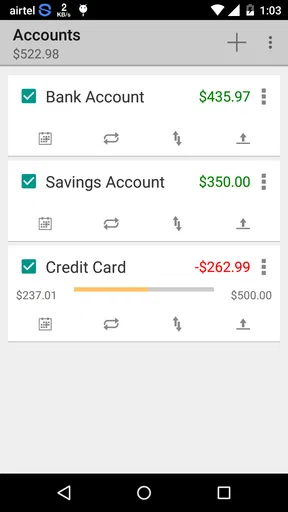
Before using Simple Checkbook Ledger with another person, I would separate the accounts conceptually, even if the app is being used on one phone. A household might have a shared checking account, a personal account, and a cash envelope. Those should not be mixed into one running total. If the app allows the user to manage multiple account records in the installed version, each one should be named clearly; if the chosen setup is a single ledger, the descriptions need to make the account boundary unmistakable.
This is one of the less obvious decisions that can determine whether a checkbook app remains useful. A transaction list is not automatically a budget. It tells me what I recorded, but it does not remove the need to decide which money belongs to which purpose. I would avoid entering personal purchases into a household register merely because the same phone is being used.
I would also agree on how to handle pending payments. A checkbook-style record is valuable precisely because it can include spending before the bank reflects it, but that only works if everyone uses the same rule. For example, the household could record a bill when it is scheduled or when it is actually paid, but mixing those approaches makes the balance difficult to interpret.
Another useful habit is to distinguish corrections from ordinary spending in the description. If an amount was typed incorrectly, correcting it transparently is better than silently adding an unexplained adjustment. This is not a glamorous feature or a hidden trick; it is a workflow choice that protects the meaning of the ledger when more than one person relies on it.
The app is free to download, while in-app purchases are listed at $1.99 per item. I would check the available purchase details on the device before deciding whether any optional item is worthwhile, especially when the app is being used for a shared household purpose. The basic appeal is its low barrier to trying a manual ledger, not a promise that every household need is covered without adjustment.
Coordination is where a basic register earns its place
For me, the strongest household use is preventing duplicated assumptions. If one person says a bill was handled and another person sees no record, the conversation becomes guesswork. A current ledger gives both people something concrete to inspect. It does not settle every disagreement, but it can show whether the amount was recorded, when it was entered, and how it affected the running balance.
I would use a short, recognizable description rather than a vague label such as “payment.” “Water bill” or “school supplies” is more useful later because the entry can be understood without remembering the entire day. Consistent wording also helps when a household reviews several weeks of spending and wants to spot a pattern without turning the review into a major budgeting project.
A second practical insight is to use the ledger before, not only after, a purchase. The app becomes more useful when the question is “How much can we safely spend?” rather than simply “Where did the money go?” That is particularly helpful for irregular expenses, because a household can include a known upcoming payment in its working balance and avoid spending money that already has a job.
Still, I would not confuse this with automatic account monitoring. A manual register cannot know that a card payment was reversed, that a bank fee appeared, or that a scheduled transfer changed unless someone records the event. The safest routine is to compare the ledger with the real account periodically and correct differences while they are still easy to explain.
This is also where the app differs from many modern budgeting alternatives. A bank-connected finance service may save time by importing transactions and grouping them automatically. A spreadsheet may offer more flexible formulas, shared editing, and custom reports. A full budgeting app may handle goals, categories, recurring plans, or broader household planning. Simple Checkbook Ledger is more appealing when those layers feel excessive and the immediate need is a straightforward record.
The trade-off is that simplicity moves work back to the user. I prefer that for a small, clearly defined account, but I would choose a spreadsheet or a broader finance app for a household with many accounts, detailed category analysis, or several people editing from different devices. The right choice depends less on the app’s price than on how much manual coordination the household is willing to maintain.
Age, trust, and who should be allowed to use it
The app carries an Everyone content rating, which fits its ordinary financial-record purpose. That does not mean every child should be given responsibility for a real account. Age suitability and financial readiness are different questions. I could see it being useful as a supervised way for an older child to record allowance spending or learn how a running balance changes, but an adult should decide what information belongs in the ledger and review the entries.
For shared use, trust should be discussed plainly. Anyone who can edit a record can affect the balance that other people rely on. I would not use a communal device casually if it contains sensitive financial details, and I would avoid treating the app as a secure vault for account credentials. A ledger entry can explain a transaction without including private banking information that does not need to be there.
This matters in households where different people have different levels of access. A teenager may be allowed to record a purchase from a shared spending fund but not to manage the entire account. A housemate may need to see the shared balance but not personal transactions. Because the app is a ledger rather than a family administration system, these boundaries have to come from the household’s routine and device practices.
I also appreciate that the basic concept is easy to explain. Someone who has never used a budgeting app can understand a list of deposits, payments, and a running balance more quickly than a dashboard full of charts. That makes it a reasonable teaching aid, provided the adult supervising it explains that the app is a record of entered information, not an independent source of truth.
What the current release offers and where friction remains
Simple Checkbook Ledger was released on Aug 3, 2016, and the current version is 3.5. It requires at least OS 11, so compatibility is an early practical check before a household commits to using an older phone as its shared device. I would confirm that the intended phone meets that requirement rather than assuming any spare device will work.
The app has reached over 100 thousand installs, with an average rating of 3.4 from around 2.5 thousand ratings and roughly 1.2 thousand written reviews. Those figures suggest a real user base, but they also make me temper expectations. This is not the kind of product I would select because it appears universally loved; I would select it because the simple register model matches a specific need.
My main friction point is the possibility of manual-entry fatigue. The first few transactions feel easy, but a shared routine can weaken when someone is busy, offline, or unsure whether another person already recorded the payment. The app’s simplicity does not solve that social problem. A household should decide who checks the ledger and when, otherwise the apparent balance can gradually drift away from reality.
I would also be cautious about using it as the only record for a complicated financial life. If I needed detailed reporting, automatic imports, extensive planning, or sophisticated collaboration, I would look elsewhere. Its narrow focus is exactly why it can be approachable, but that same focus limits how far it can scale with a growing household.
One useful test is to try it with a single account for a week rather than transferring every financial detail into it immediately. Record ordinary purchases, one predictable bill, and a correction if necessary. Then ask whether everyone can understand the balance without explanation. If the answer is yes, the app may be a good fit. If the routine already feels like administrative work, a more automated alternative will probably save frustration.
My household verdict
I recommend Simple Checkbook Ledger to people who want a deliberately simple way to track one or a few account balances and who are comfortable entering transactions themselves. It is especially suitable for a household that shares one device or one spending responsibility and wants a common running record without adopting a large budgeting system.
I would skip it for a family expecting automatic synchronization, bank feeds, detailed financial dashboards, or fine-grained user permissions. I would also skip it when several people need independent access from different phones and there is no dependable way to coordinate edits. In those situations, a shared spreadsheet or a finance service designed around collaboration may be the better tool.
For the right user, the modest design is the point. I can open it, record what happened, and use the resulting balance to make a more careful decision. For a shared household, that only works when account boundaries, editing responsibility, and review habits are agreed in advance. The best reason to use this app is not that it manages money for you, but that it makes your own money-recording routine easier to keep.
Teelu Apps has kept the idea focused: a free finance app for maintaining a checkbook-style record, with optional in-app purchases priced at $1.99 per item. I see it as a practical companion for a small, clearly defined account rather than a complete financial life manager. If that distinction matches what you need, it is worth trying; if not, its simplicity will feel more like a limitation than a benefit.
Verdict
Strengths of Simple Checkbook Ledger
- Clear income and expense tracking for everyday budgeting.
- Simple ledger format is easy for beginners to understand.
- Useful for monitoring account balances and spending habits.
- Quick entry process makes recording transactions convenient.
- Helps organize personal finances without complicated features.
Limitations of Simple Checkbook Ledger
- May feel too basic for users needing advanced budgeting tools.
- Limited reporting options can make detailed analysis difficult.
- Manual transaction entry can become time-consuming over time.
- Not ideal for managing complex accounts or shared household finances.
- Some features may require in-app purchases or contain advertisements.
Similar Picks in This Category
View All
Google Wallet
Google LLC4.3

Airtel: Recharge, Bank & Loans
Airtel4.0

PayPal - Pay, Send, Save
PayPal Mobile4.2

DANA Indonesia Digital Wallet
PT Espay Debit Indonesia Koe4.5

Binance: Buy Bitcoin & Crypto
Binance Inc.4.8

Cash App
Block, Inc.4.7
Frequently Asked Questions
What is Simple Checkbook Ledger used for?
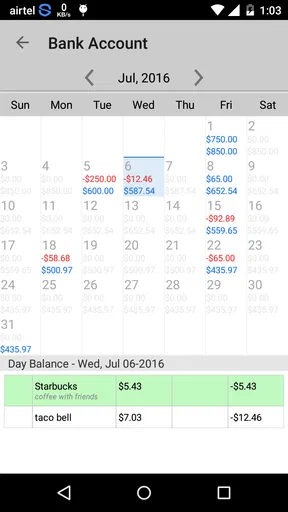
Simple Checkbook Ledger is designed to help you record and monitor personal financial transactions in a straightforward way. You can enter deposits, withdrawals, payments, and other adjustments, then review your running balance and transaction history. It is especially useful for people who want a lightweight alternative to full-featured budgeting apps or who prefer manually tracking a checking account.
Does Simple Checkbook Ledger connect directly to my bank account?
The app is primarily intended for manual checkbook and transaction management rather than automatic bank synchronization. You generally enter transactions yourself and use the ledger to compare your records with your bank statement. This approach can be helpful for privacy and control, but it also means the accuracy of your balance depends on entering every transaction correctly and keeping the ledger up to date.
Can I use Simple Checkbook Ledger for multiple accounts?
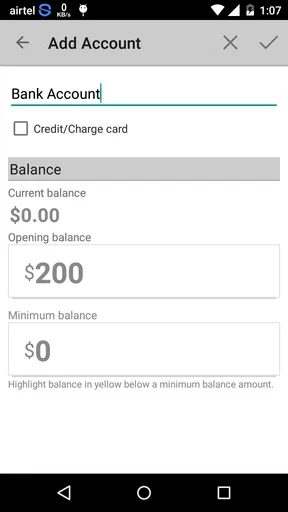
Simple Checkbook Ledger may be suitable for tracking more than one financial account, depending on the version and features available on your device. Users should check how the app handles separate ledgers, account switching, and opening balances before relying on it for several accounts. If you need advanced account organization, categories, shared access, or investment tracking, a larger personal-finance application may be more appropriate.
Is Simple Checkbook Ledger suitable for budgeting and expense analysis?
The app focuses mainly on maintaining a transaction ledger and calculating an available balance, so it may not provide the same depth of budgeting tools found in dedicated finance applications. It can still support basic spending awareness when you review your entries regularly, but features such as detailed reports, automatic categorization, bill reminders, goal tracking, or graphical spending analysis may be limited or unavailable.
Is Simple Checkbook Ledger safe and easy to use?
Simple Checkbook Ledger is built around a relatively uncomplicated method of recording financial activity, which makes it approachable for users who prefer manual control and a clean interface. However, you should still review its privacy information, backup options, and data-export capabilities before storing important records. Avoid assuming that an app replaces official bank statements, and keep independent backups if the ledger contains essential financial information.
